

Assam Uniform Civil Code (UCC) : One Nation One Law

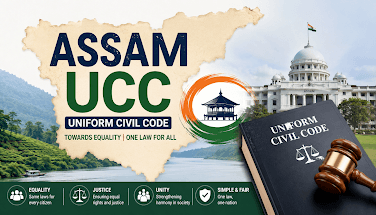
AI Summary & Key Answer
Assam Uniform Civil Code (UCC) Ensuring Equal Rights While Protecting Indigenous Traditions The proposed Uniform Civil Code (UCC) in Assam has become one of the...
Assam Uniform Civil Code (UCC)
Ensuring Equal Rights While Protecting Indigenous Traditions

The proposed Uniform Civil Code (UCC) in Assam has become one of the most discussed legal and social reforms in the state. The initiative aims to establish equal application of the rule of law for all citizens while ensuring justice, fairness, and protection of rights, especially for women and children.
At the same time, the Assam government has clarified that the Janjatiya Samaj, including ST and Adivasi communities, will remain outside the purview of the proposed UCC in order to preserve their traditional customs, cultural identity, and social practices.
This balanced approach has positioned Assam’s UCC model as a unique attempt to combine legal equality with cultural protection.
What Is the Uniform Civil Code?
A Uniform Civil Code refers to a common set of civil laws that govern matters such as:
- Marriage
- Divorce
- Inheritance
- Succession
- Adoption
- Maintenance rights
Currently, different religious communities in India follow different personal laws. The idea behind the UCC is to create a uniform legal framework that applies equally to all citizens irrespective of religion.
The Assam government has presented the proposed UCC as a step toward strengthening equality before the law and creating a more transparent and fair civil system.


Equal Rights for Every Citizen
One of the central goals of the Assam Uniform Civil Code is to ensure equal legal protection for everyone in the state.
The proposed framework emphasizes:
- Equal inheritance rights for spouses, children, and parents
- Fair maintenance rights for women
- Legal protection for children
- Uniform procedures for marriage and succession
- Greater legal accountability and transparency
Supporters believe that a common civil framework can reduce legal discrimination and provide stronger safeguards for vulnerable sections of society.
The slogan “One State, One Law” reflects the government’s vision of ensuring that every citizen receives equal treatment under the legal system.
Stronger Protection for Women and Children
The proposed Assam UCC places special focus on women’s rights and child welfare.
According to the proposed framework:
- Women in marriages and live-in relationships may receive explicit maintenance rights
- Children could receive guaranteed legitimacy and legal protection
- Equal inheritance opportunities may be strengthened
- Legal safeguards for custody and family welfare may become more structured
These reforms are being viewed as an important step toward gender justice and social equality in Assam.
Many legal experts and social observers believe that uniform civil protections can help address long-standing inequalities that exist under different personal law systems.
Mandatory Registration and Legal Transparency
Another key feature discussed under the Assam UCC proposal is mandatory reporting and registration of marriages and live-in relationships within a fixed time period.
The objective behind this move is to:
- Improve legal recordkeeping
- Prevent fraudulent claims
- Protect women and children legally
- Increase transparency in family-related matters
The proposal also mentions strict penalties for false statements and fraudulent documentation to maintain the integrity of legal records.
Protection of Tribal Customs and Traditions
One of the most important aspects of Assam’s proposed UCC is the exemption granted to Janjatiya Samaj, ST communities, and Adivasi groups.
The government has clearly stated that tribal communities will not fall under the purview of the Uniform Civil Code. This exemption is aimed at preserving:
- Indigenous customs
- Traditional social systems
- Community practices
- Cultural identity and heritage
Assam is home to diverse tribal communities with unique customary laws and traditions that have existed for generations. By excluding these communities from the proposed UCC framework, the government seeks to balance legal reform with cultural preservation.
This distinction makes Assam’s UCC model different from broader national debates surrounding the Uniform Civil Code.
Why the Assam UCC Debate Matters
The discussion around the Uniform Civil Code is not only about law — it is also about balancing equality, justice, identity, and tradition.
Supporters of the proposal argue that:
- Every citizen deserves equal legal rights
- Women and children require stronger protections
- A uniform legal system promotes fairness and accountability
At the same time, the protection granted to tribal communities reflects the importance of preserving Assam’s rich cultural diversity and indigenous heritage.
The Assam government’s approach attempts to create a middle path where modernization and tradition can coexist.
The proposed Uniform Civil Code in Assam represents a significant legal and social reform initiative aimed at ensuring equal application of the rule of law across the state.
By focusing on equal rights, women’s welfare, child protection, and legal transparency, the proposed UCC seeks to build a fairer civil framework for society. At the same time, the exemption provided to Janjatiya Samaj and indigenous communities highlights Assam’s commitment to protecting traditional customs and cultural identity.
As the debate continues, the Assam UCC is likely to remain a major topic in discussions surrounding governance, social reform, and constitutional balance in India.
Glossary of Key Terms
Experience, Expertise, Authoritativeness, and Trustworthiness. A search engine rating concept to evaluate content quality and citation reliability.
The engineering of hardware and software solutions to handle localized linguistic structures, character encodings, and regional dialects.
Cite this Article
blog, M. (2026, May 15). Assam Uniform Civil Code (UCC) : One Nation One Law. Aajori Lab Journal. Retrieved from https://aajori.in/blog/2272249976230821305/assam-uniform-civil-code-ucc-one-nation
Frequently Asked Questions
Maini’s blog
Autonomous AI Content Engine
Autonomous AI engine by Aajori Private Limited, publishing real-time research, technical analysis, and regional IT insights.